Deadly Delivery
Walter Leroy Moody bombing murders in Alabama, Georgia
Judge Robert Vance was killed by a package bomb explosion in his Alabama home in December 1989. A recovered bomb in Atlanta helped trace the attack to Walter Leroy Moody.
Original air date: October 29, 1998
Posted: April 14, 2026
By: Robert S.
Season 3, Episode 5
With the 1989 Christmas season just around the corner, no one noticed an additional package arriving for Judge Robert Vance in Birmingham, Alabama. His wife Helen was looking forward to spending time with their children over the holidays. Judge Vance casually opened the delivery, wrapped in brown paper and tied with a string. No one could have foreseen the explosion that rocked the Vance home, instantly killing Judge Vance and severely injuring Helen.
Just two days later, in his office in Savannah, Georgia, civil rights attorney Robert Robinson was settling into his new-week ritual. Monday mornings meant going through the weekend's deliveries and organizing his schedule. A box in plain brown paper and tied with string didn't give Robinson pause, so he opened it. Across the hallway, optometrist Emerson Brown was startled when he both heard and felt an explosion. Robert Robinson had absorbed the brunt of the mail bomb's blast, and there seemed little Brown could do to save his friend.
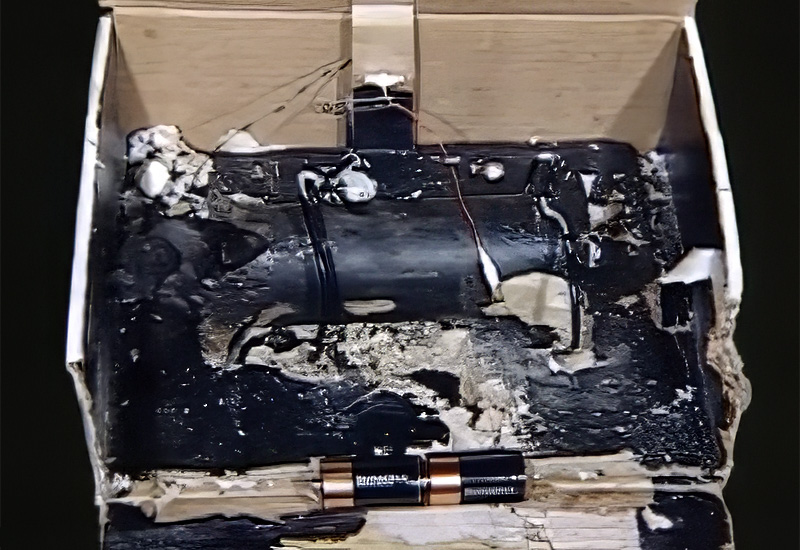
On the same Monday, a security team was screening incoming packages at the Eleventh Circuit building in Atlanta. An alert agent noticed an anomaly. Just four months prior, a tear gas bomb had been sent to the NAACP office just a mile away, and the accompanying literature indicated future aggression. While building security was notifying the FBI of their dangerous discovery, Wyllie Dennis was running late for an appointment in Jacksonville, Florida. The state representative was loyal to her constituents, and this Monday's schedule was relentless.
Wyllie barely noticed the string-tied, paper-wrapped package in her office as she dashed out for her appointment. The call she received later about similar packages and their victims was harrowing. Wyllie Dennis thought she was an unlikely target for such heinous attacks – the idea of an undetonated bomb being delivered through the mail was unfathomable. Wyllie called the authorities, and she soon learned the threat had been real – she'd escaped a brush with death.
The Department of Alcohol, Tobacco and Firearms has the nation's leading bomb experts. They successfully dismantled the recovered bomb in Atlanta and began studying its construction. With evidence collected in Birmingham and later in Savannah, ATF agents learned the bombs had come from the same source. Their unusual construction did not immediately remind local investigators of any similar cases, but wider communication was the key. An agent from a nearby region recognized the distinctive design from an early-1970s case.
Hazel Moody had discovered an unlabeled package in her kitchen. Without much thought, she began opening it, and it exploded. The unsuspected blast caused severe injuries. The bizarre incident led investigators to Hazel's husband Walter, who had built the crude device. But why? And for whom? His older bomb, crude as it was, would be the only design that matched this new batch of terrorist mail bombs.

The Facts
Case Type: Crime
Crimes
- Murder
- Attempted murder
Date & Location
- August 21, 1989 through December 18, 1989
- Rex, Georgia
Victims
- Robert Vance (Age: 58)
- Helen Vance
- Robert Robinson (Age: 42)
Perpetrator
- Walter Leroy Moody (Age: 54)
Weapon
- Bomb
Watch Forensic Files: Season 3, Episode 5
Deadly Delivery
The Evidence
Forensic Evidence
- Bomb design match
- Typewriter match
Forensic Tools/Techniques
- None used in this episode
Usual Suspects
No Evil Geniuses Here ?
- None occurred in this episode
Cringeworthy Crime Jargon ?
- None uttered in this episode
File This Under... ?
- No crime show commonalities in this episode
The Experts
Forensic Experts
- None featured in this episode
Quotable Quotes
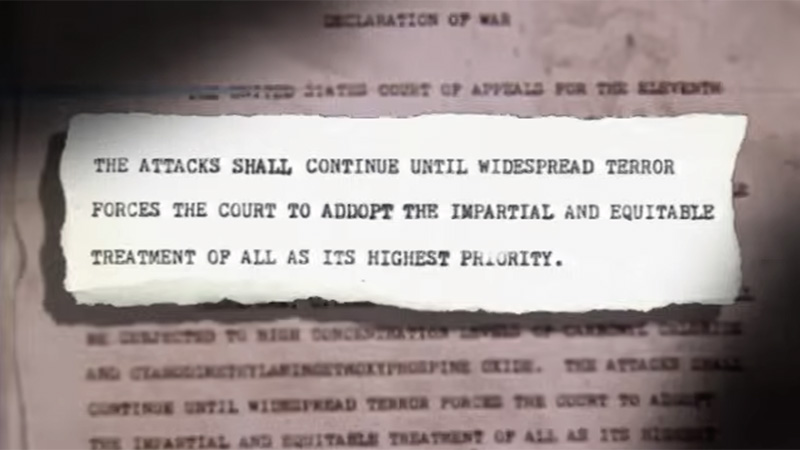
- "The bomb told us we were dealing with a very angry guy because of the nature of their construction and the nature of that construction also told us we were dealing with a very purposeful individual. " - Bill Hinshaw: FBI, Retired
- "I saw a common hand, which was the bomber's signature, in all four bombs. Which led me to conclude that only the same person or persons, but the same person constructed these four bombs to the exclusion of anybody else." - Tom Thurman: FBI, Retired
- "It's the only one that we'd ever had like that. We have lots of pipe bombs and different kiinds, and even remote controlled. But when you have one that's the only one you've ever seen like it, I mean, and it sticks." - Lloyd Erwin: Chemist, ATF
- "I think those that who have come to know Moody in various spheres would say that Moody could be charming, he could be in some respects enormously bright. I think one psychologist called him a genius. But on the other hand, he could become blinded by obsession." - Mark Winne: Reporter, WSB-TV
- "The first search of the house appeared as the house had been sterilized, meaning that normal things that would be found in a house that could be used to fabricate a bomb device: wire, nails, pliers, even pieces of pipe, things that you probably have around your house, they were totally lacking – absent in this house." - Bill Hinshaw: FBI, Retired
- "I think if we had not identified Moody as a potential suspect, quickly, I think there would've been more bombs. I don't think he was through. I really don't think he was through. I don't think he would've ever been through, as long as he was out there." - Thomas Stokes: ATF, Retired
TV Show About This Case
- The New Detectives: Short Fuse (s02e08)
Book About This Case
- Priority Mail - Mark Winne
Last Words
Just before Halloween in 1998, this season-three episode premiered. The bombing murders of Steve Christensen and Kathy Sheets were covered in late season two's Postal Mortem (s02e11). Mark Hofmann was fortunately foiled by the accidental explosion of one of his own bombs, otherwise his murderous spree would've continued. Later seasons would see multiple episodes where a bomb is the star weapon. Season ten's Tagging a Suspect (s10e10) and Wired for Disaster (s10e40) were followed by season eleven's Live Wire (s11e20) and Small Town Terror (s11e34).
My informal survey revealed over half the bomb-centric episodes of Forensic Files have the perpetrator sending their bomb(s) through the mail. I suppose this speaks to the devices' construction – that each didn't explode during transit. But it must lead one to consider how many improperly built mail explosives have caused accident or injury. Does it make being a United States postal worker a dangerous job? Was the prevalence higher before X-ray practices became standardized? How about explosive-sniffing dogs?
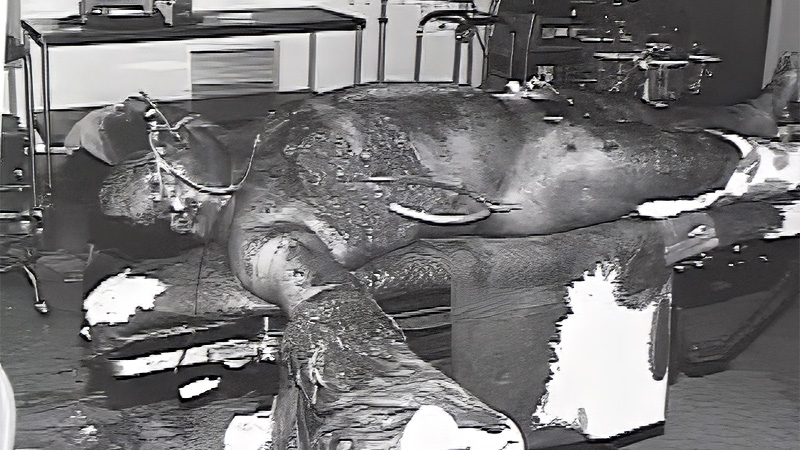
Mentioned in previous early-series (yes, season three is still early-season for FF) articles, the imagery shared can lean on the graphic side. Forensic Files toned down the gory, on-scene photos with season four, but we get a couple of gruesome images from the Robert Robinson explosion site. We see his full body, mid-triage, thankfully in black-and-white. This is accompanied by a close-up shot of his single arm, which is thankfully less shocking, and a panned color shot of a particularly bloody crime scene photo.
I didn't quite follow the event sequence during the episode, so I took notes and followed up. Here's a better timeline of the pertinent events in the Walter Leroy Moody case:
- May 7, 1972 — A bomb injures Walter Leroy Moody's first wife Hazel.
- October 19, 1972 — Moody is sentenced to six years in prison for bomb possession.
- August 1989 — Moody is denied a final rehearing in his effort to overturn the 1972 conviction.
- August 21, 1989 — Moody's tear gas bomb explodes in the NAACP office in Atlanta, GA.
- December 16, 1989 — Judge Robert Vance (58) is killed and wife Helen seriously injured by a mail bomb.
- December 18, 1989 — Attorney Robert Robinson (42) is killed by an identical mail bomb.
- December 18, 1989 — The Eleventh Circuit building in Atlanta intercepts another bomb before it explodes.
- December 19, 1989 — Willye Dennis notifies federal agents of her package; avoids catastrophe.
- February 8, 1990 — Federal agents execute a search warrant at Moody's home in Rex, GA.
- July 10, 1990 — Moody is arrested at his home in Rex, GA.
Mark Winne sported a super indicating "Reporter, WSB-TV," and he was also the author of a book covering this case. I hope his on-air presentation was more interesting than his interview demeanor. I found his delivery to be. Stilted. With specific, and calculated ... pauses. And not always focused on the most important parts of the narrative. It reminded me of certain audio books – some that need to start at 1.25x speed, and then possibly sped up. Tune into his particular phrasing at 20:40 and cringe.
Gentle jibes aside (I'd be a terrible interview), the amount of federal agents this episode pulled was epic. No one stood out like ATF explosives expert Jerry Taylor from Small Town Terror (s11e34), but the volume was nonetheless impressive. All retired agents, we had interviews with FBI agents Bill Hinshaw and Tom Thurman, and ATF's Thomas Stokes and Frank Lee. And don't forget the investigative star, ATF chemist Lloyd Erwin. Altogether, it felt like a true crime all-star game.
The bombs and the investigation
When security at the Eleventh Circuit Court building in Atlanta identified Moody's suspicious package, it was quickly dismantled. The value retained by not needing to detonate the bomb is immeasurable. With the bomb's design, agents quickly knew they were dealing with a single perpetrator. And still, without the internet, information-sharing was key. By describing the construction details of the Eleventh Circuit bombs (flat metal endcaps with a threaded rod bolted through the center) to other agents, Moody's distinct 1972 bomb design was recalled. This was the lead that pointed investigators to Moody, thankfully since the typewriter ended up being a false lead.
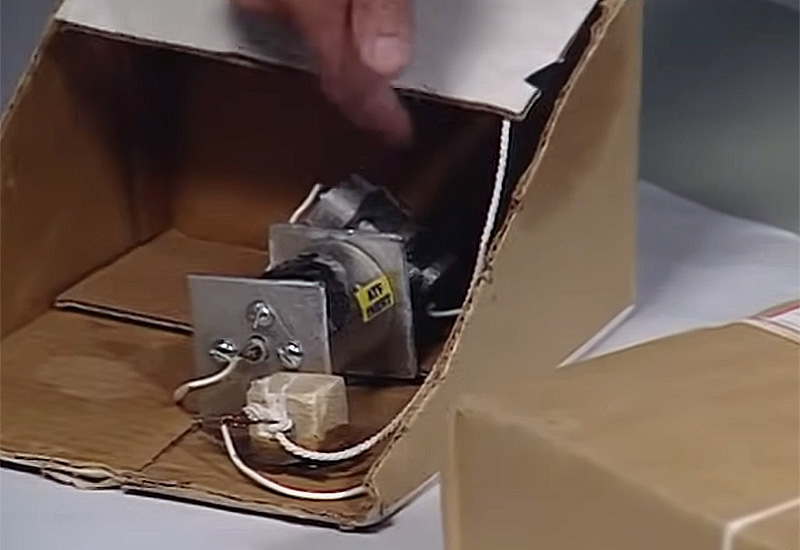
When ATF agents were dismantling the recovered bomb from Atlanta, two unsuspecting victims had already lost their lives. Their killer had built the same bomb technicians were meticulously examining and cautiously disassembling. It takes someone with a stronger nerve than mine – no matter how much training I'd had. I can't imagine what their options even start with. Plunge it underwater or find another way to render the explosive inert? Work under X-ray to penetrate the package and dismantle the triggering assembly or power supply?
Walter Leroy Moody is the only bombing suspect I can recall in the series that used spray paint or a similar masking agent in his bomb-making. Not that my survey is broad, but sometimes good ideas (even for bad purposes) catch on. But even beyond Forensic Files, I couldn't recall a perpetrator using spray paint to cover a forensic footprint. Fans might cite Daphne Wright's attempt to hide evidence of Darlene VanderGiesen's murder with a Cookie Monster blue in Hear No Evil (s14e02). I reject that, as it was neither spray paint nor successful.
Model builders (either in Forensic Files' production or with the ATF) had a replica to demonstrate Moody's triggering device. Not that a string attached to the box flap and a metal lever is sophisticated. With an endless number of possible trips and triggers, safeties and overrides, Moody's implementation was relatively rudimentary. But it was still as effective as it had to be for his purposes. I suspect such a clumsy bomb configuration would be identified rapidly with today's knowledge and technology – D-cell batteries, an eight-inch tube, and metal switches and wires hopefully ring alarm bells somewhere.
Targeting judges, attorneys, state officials and the like is the fast-track to inviting the hammer of justice. Robert O'Ferrell had the misfortune to find this out. Among a million documents – did they really need to visit all 1M and they found his last? Was it the one-millionth one from 1.7M in total? If they found it in the first 500k, did they keep looking? – his had the improperly replaced "1" slug on his now-discarded typewriter.
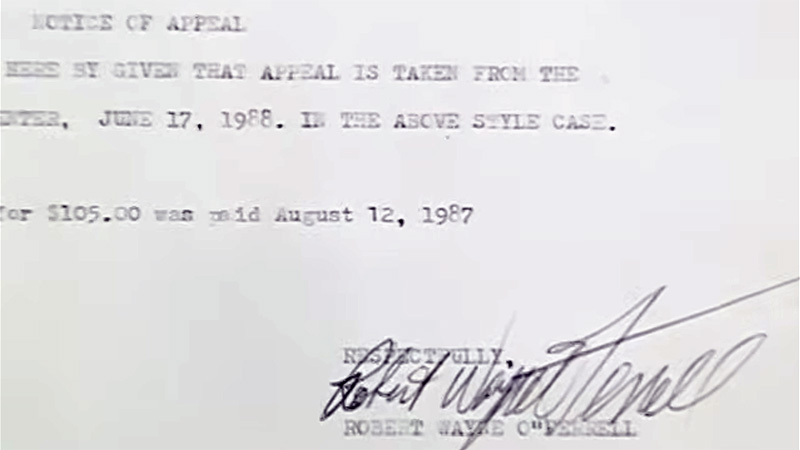
'Ferrell having no recollection of the typewriter's fate was probably unconvincing, so investigators went through "every inch" of the junk dealer's property. Finding nothing above ground on O'Ferrell's premises, agents searched below as well, pumping his septic tank.
Walter Leroy Moody and his problems
Articles don't agree whether Walter Leroy Moody served three or five years of his six-year federal prison sentence. He earned this after being found guilty of – not maiming his wife with a homemade explosive device – but for merely being in constructive possession of such an item. No big deal. Regardless, without that conviction to rail against for the next ten years following his release, what was Moody's original beef? In 1972, he was only 37 – his anger or hatred toward something was already boiling. Whoever his original target was took a backseat to Moody fighting his conviction, seemingly through the proper legal channels for ten-plus years.
When this ultimately failed, the now 54-year-old Moody resorted to the previously disastrous plan from his 30s. He would build and mail a bomb, kill an innocent victim, and then others would hear his bemoaning. Moody's "test" bomb – tear gas – was mailed to the NAACP office in the same month his appeal was denied rehearing. And to Moody's criteria, his test was successful. His bomb had arrived at its intended target and had successfully detonated. This gave him the crazy-person fortitude to press on and build at least four explosive package bombs. These vicious devices were woven with nails to increase the shrapnel when exploded.
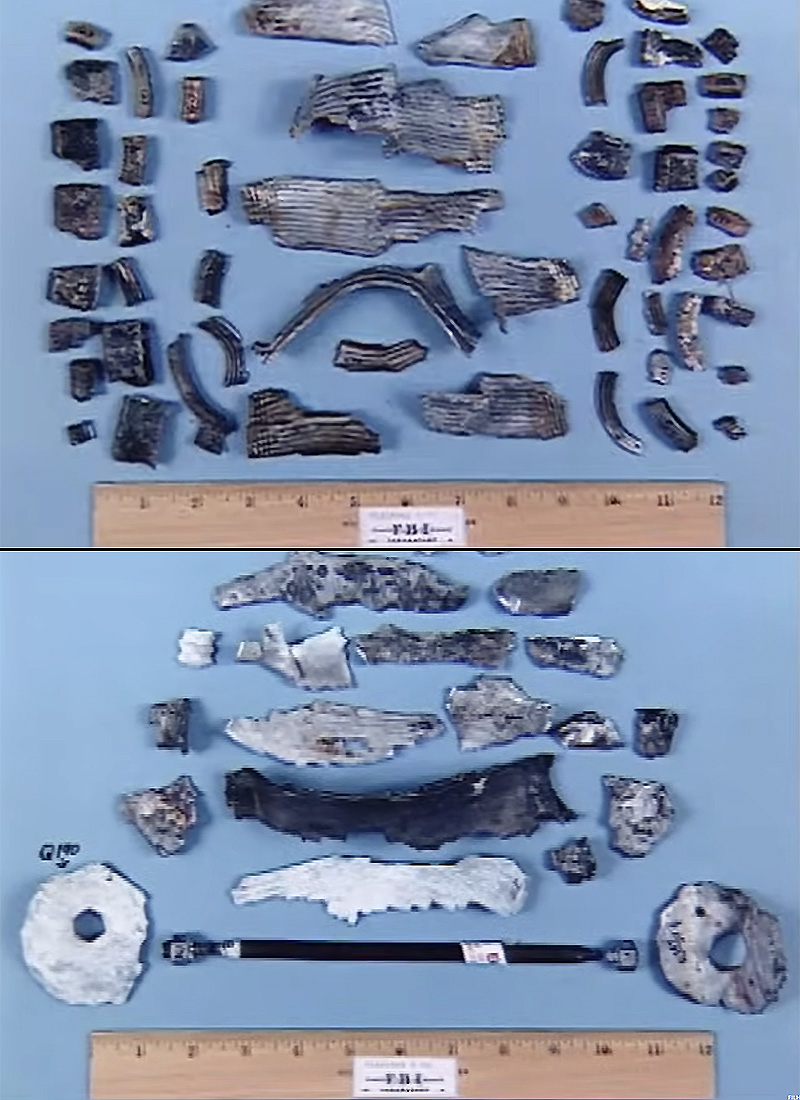
The focus of Moody's ire might've been the Eleventh Circuit courts for perceived injustices against himself, or Julie Love, or his imaginary friend Bob. His reaction to the Love case wasn't his only reason for targeting minorities with his mail bombs. Moody's racism was visible to all who looked – one more small-minded, angry narcissist with a victim complex.
Susan Moody, victim turned witness
And what kind of partner in crime might such a "man" as Walter Moody seek in life? A meek, immature, ragdoll wife – twenty years his junior. I'm sorry, but I'm flummoxed how a Susan McBride ends up meeting, dating, loving (sic), and marrying a Walter Leroy Moody. What did her parents think? They were almost Moody's age themselves, so I'd hope they offered some reluctance, even some resistance, to their 28-year-old daughter marrying a near-50-year-old Walter Moody.
Being the abuser he was to Susan, Walter Moody must have understood she'd crack if put under pressure. He'd implicated her in carrying out his felonies, and if ever caught, she'd fold like a napkin. He probably tried to coach her on how to react if ever confronted – by shopkeepers or even police. Little good this did since Susan immediately turned on Moody and elected to testify for the federal prosecution in exchange for her own immunity. Smart move – I bet Susan was looking for a safe way out of Walter Leroy Moody's control for a while, but she feared his reprisal.
The list of items Moody made his delicate wife Susan purchase from small hardware stores in the southeast United States reads like a meth lab starter set: "steel pipe, acrylic tubing, raincoats, rubber gloves, shower caps, safety glasses." Perhaps this gear wasn't bought all at once, or perhaps we lacked the context of Breaking Bad, but specific collections of items might stand out to an alert shopkeeper. And some of these seem excessive considering the entire contrivance ends up covered with black enamel spray paint.
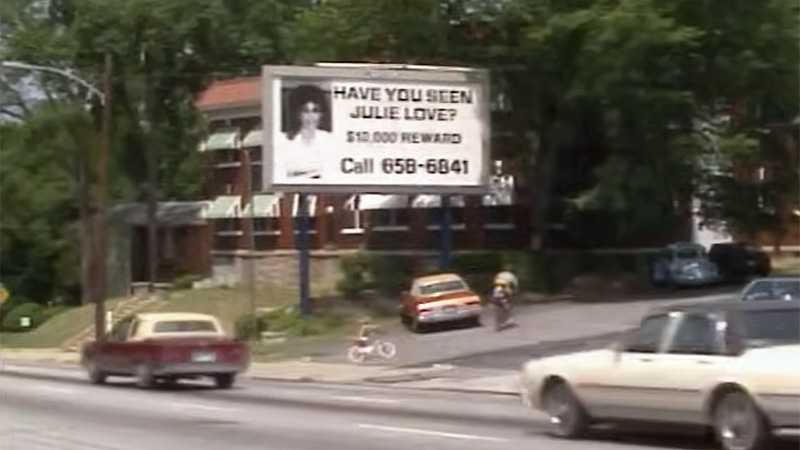
Our episode called out Moody himself shoplifting a box of nails in Georgia. This may sound clever, if you believe only the nails will be recovered at the explosion site. Did Walter think the nails would be the most memorable purchase his young wife would've made – in the middle of nowhere? Stealing the nails felt arbitrary.
The show also visited the mysterious fingerprint found on one of Moody's manifesto / threat letters. A defense attorney can readily suggest reasonable doubt to juries with the fingerprint or DNA from an unidentified individual among the evidence. So Susan's testimony that led to the copy-machine attendant as the source of the fingerprint was brilliant. If Moody had been bold enough to do his own dirty work, he might've noticed the ungloved oversight.
A few final notes
Wrapping up with Susan, it's hard not to call out the production in a few reenactments. I'm normally impressed with reenactments in Forensic Files – from the choice of actors to staging and action, even special effects. But the clothing choices for 'Susan Moody' are pretty laughable. I'm not sure who dressed the actress, but they went for a "wear what you think a thief would wear" look. The large hat, oversized glasses, coat, and in the copy-machine scene, leather gloves, were a bit over the top. You'd only dress like that if you were trying to be noticed and remembered.
I was partnered with someone who was fighting a perceived legal injustice at one point. At some points, she'd become angry – uncontrollably livid – at the slights against her. Even after finishing her probation, her absentee judge didn't want to handle her request to expunge. I contributed to her efforts, and I shared a portion of her disgust toward the perpetrators in the system. Someone less stable, like Walter Leroy Moody, could've used that same anger to justify any number of retaliatory acts. But truth did prevail, and her record was expunged (at some considerable cost). The point? You can get to the finish line. You don't need to mail-bomb anyone.
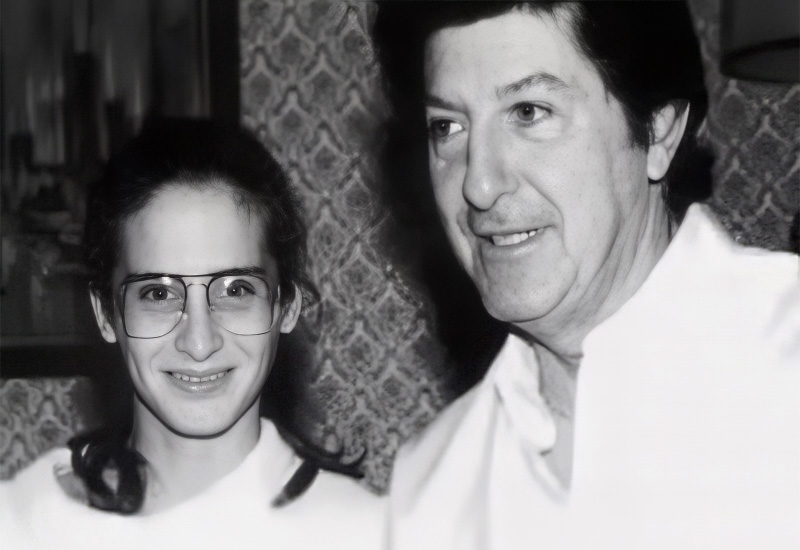
But Walter Moody wasn't getting what he wanted after a ten-year, above-board battle with the court system. Maybe Moody was the only one surprised – anybody knows you can't fight city hall. So like a good southerner, he sought revenge. But he set himself up to be identified immediately. He somehow forgot he'd spent years in a federal prison for bomb-making. I'd remember I'd been in prison, and I'd think how the ATF probably knows exactly how the bomb I built (and accidentally blew my wife up with) was designed. So now in 1989, I'd probably change up my signature design – at least a little. You know what's even easier than bolting on flat-stock, makeshift endcaps? Just buying threaded endcaps – maybe welding them for strength.
All the hard work for the typewriter match, and it was still an evidentiary dead end. As evidence, I got to extend the "types of evidence" collection to over 80 items now. And while a 'palm print' doesn't come up often, our 'typewriter-face match' has at least one counterpart. In Bitter Brew (s11e41), Joseph Corbett Jr. facilitated the kidnapping of heir Adolph Coors III. Corbett's ransom note was found to have been typed with his Royalite portable typewriter, helping to secure his conviction.
Retired agent Thomas Stokes commented that Moody would've likely continued sending his package bombs until identified and stopped. This was no revelation considering Moody's overt threats and demands. Thankfully, the agencies quickly identified Walter Leroy Moody by his distinctive bomb design – and lack of nuance and foresight.
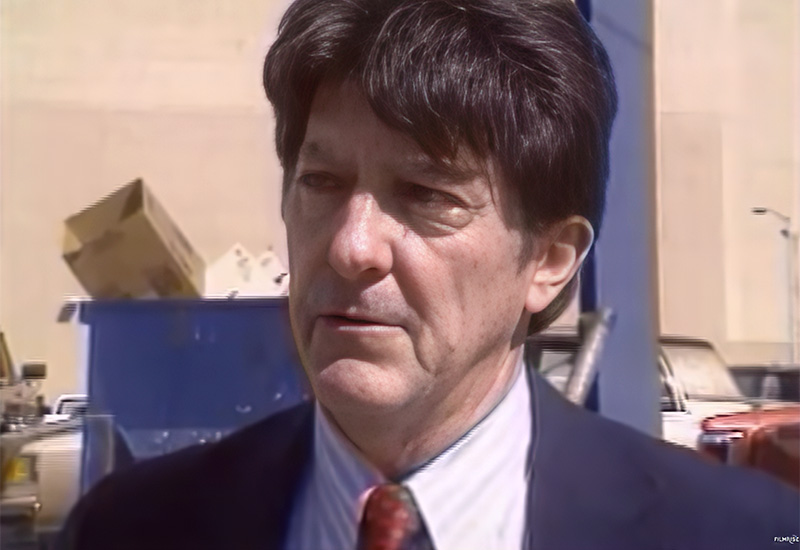
Where is Walter Leroy Moody now in 2026?
Walter Leroy Moody's federal trial was moved to Minnesota as the Eleventh Circuit court and district judges were recused from his case. In 1991, Moody was sentenced to multiple federal life terms. Separately, the state of Alabama convicted Moody of murdering Judge Robert Vance and sentenced him to death. After nearly 30 years on death row, Walter Leroy Moody was executed by lethal injection in Alabama on April 19, 2018. He was 83 years old.
Find a typo or issue with the details of this case? Leave a comment below, or contact us!