Bad Medicine
Debbie Pignataro arsenic poisoning in West Seneca
Debbie Pignataro’s baffling illness finally pointed to arsenic poisoning — and to her husband, ex-doctor Anthony Pignataro.
Original air date: July 8, 2004
Posted: April 4, 2026
By: Robert S.
Season 9, Episode 8
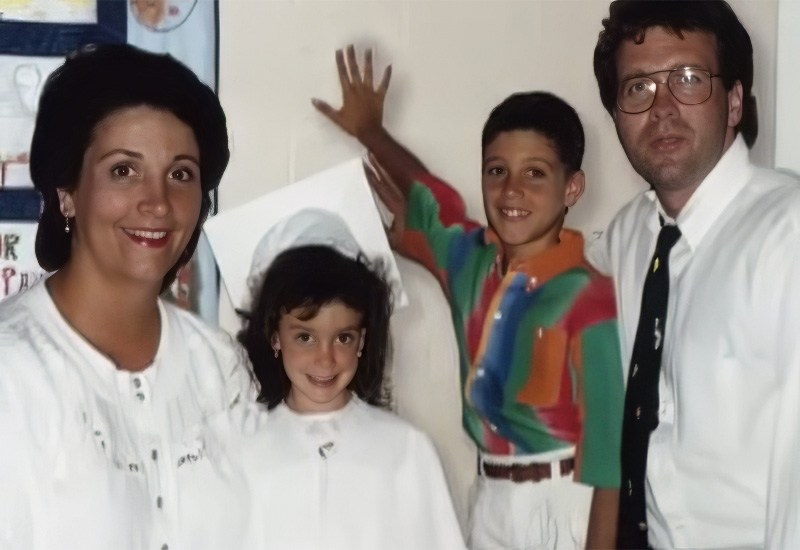
Anthony and Deborah Pignataro seemed to have it all. In 1997, their family of four shared a large home in West Seneca, New York, and their business was beginning to thrive. Dr. Anthony Pignataro had opened a medical practice that included plastic surgery and other services. His wife Debbie ran the office and clerical side of the business. And while several of the procedures being performed in Dr. Pignataro's office seemed dangerously elaborate, no one questioned the good doctor.
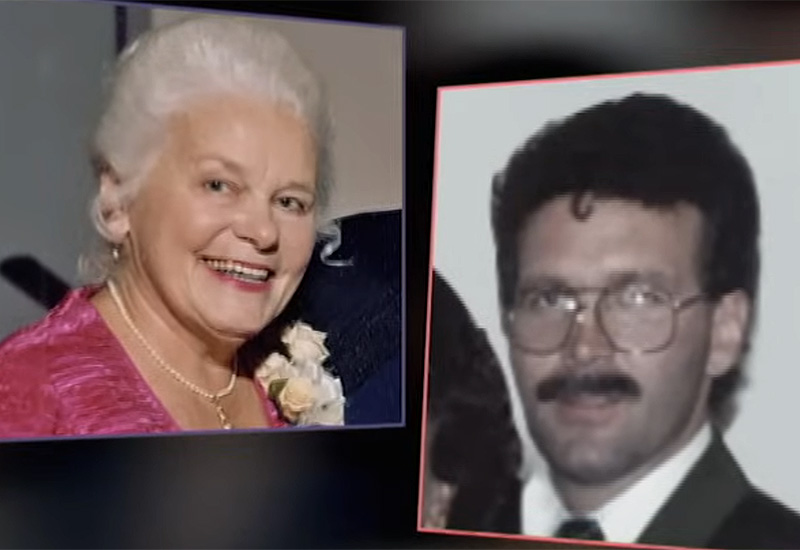
Sarah Smith, a young mother of two, was Dr. Pignataro's breast augmentation patient on September 1, 1997. They'd discussed the transumbilical procedure, and Dr. Pignataro assured Sarah that she'd be comfortable and that the whole surgery would go smoothly. Less than an hour into the complicated procedure, Sarah complained of pain. The doctor increased her anesthesia and went on with the operation.
The only assistant, a licensed practical nurse, alerted Anthony that his patient's O2 levels were dropping. A closer look showed that Sarah wasn't breathing properly. She'd received too much sodium pentothal, and her lungs were becoming paralyzed. Dr. Pignataro broke scrub and scrambled to save Sarah Smith's life. Without proper equipment in his office makeshift operating theater, there was little Anthony could do. A simple ventilator might have kept her breathing long enough for a counteragent to the anesthesia to take effect.
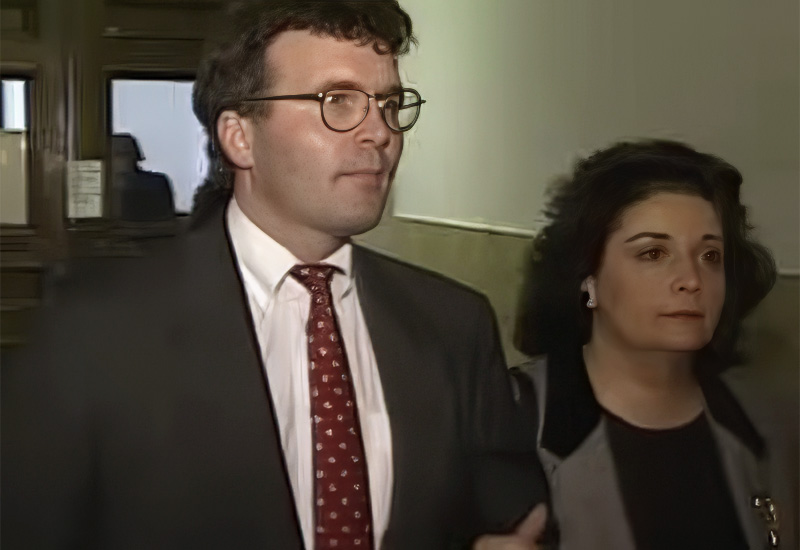
A fine line between reckless homicide and negligent homicide saw Dr. Pignataro avoid harsher consequences. After knowingly and carelessly risking his patients' well-being, he spent only six months in jail. His wife and partner Debbie stood stoically by her husband's side through the trials, sentencing, incarceration, and revocation of his medical license. This last row was the hardest for the Pignataros to hoe.
Shortly after Tony was released from prison, the Pignataros spent some time apart. This distance helped their circumstances and communication, because in late spring 1999, the couple reconciled and began living together again. In May, Debbie began to feel unwell – not like herself. At times she couldn't concentrate, and soon her feet began to hurt. The pain would come and go, and it sometimes felt more like numbness. A series of doctor visits led to guesses, but no answers.
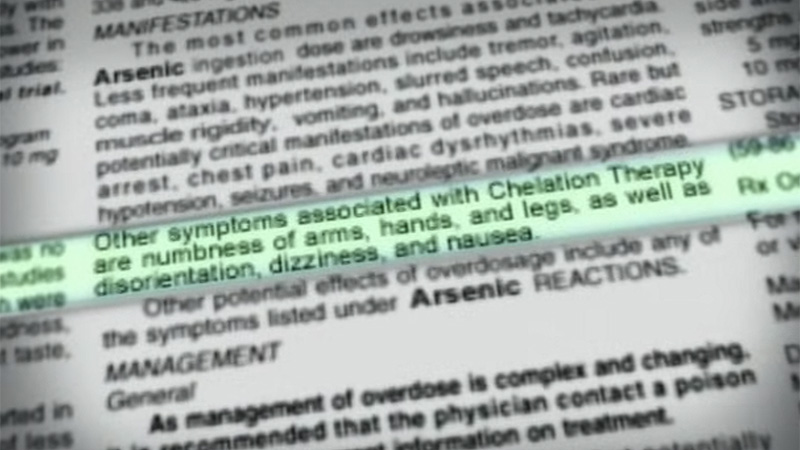
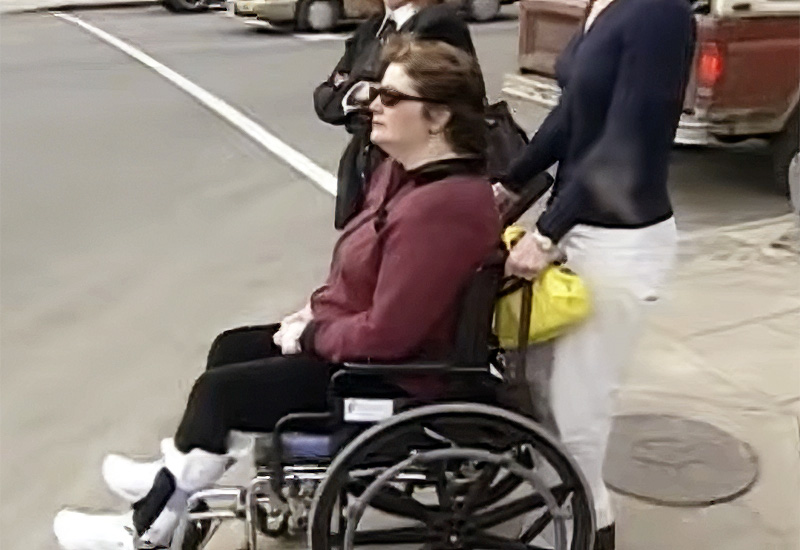
By late summer, Debbie's earlier symptoms returned, this time more severely. She was resigned to a wheelchair, as she could no longer walk, and she was hospitalized once more. A deeper examination into her illness revealed she'd been exposed to arsenic – a dangerous heavy metal. As nearly all arsenic poisonings are intentional, the authorities were soon involved. Once police began guarding Debbie and investigators took a closer look at the evidence in her hair, they zeroed in on a single suspect.

The Facts
Case Type: Crime
Crime
- Attempted assault
Date & Location
- May, 1999 through August, 1999
- West Seneca, New York
Victim
- Deborah Pignataro (Age: 41)
Perpetrator
- Anthony Pignataro (Age: 41)
Weapon
- Poison: Arsenic
Watch Forensic Files: Season 9, Episode 8
Bad Medicine
The Evidence
Forensic Evidence
- None found or used in this episode
Forensic Tools/Techniques
- Atomic absorption spectrophotometry
Usual Suspects
No Evil Geniuses Here ?
- None occurred in this episode
Cringeworthy Crime Jargon ?
- None uttered in this episode
File This Under... ?
- No crime show commonalities in this episode
The Experts
Forensic Experts
- None featured in this episode
Quotable Quotes
- "Anthony Pignataro came from a good family. His father was a well respected and excellent surgeon in Buffalo. His mother was a fine person. I guess life was handed to him on a platter." - Edward Tyczka: (Ret.) West Seneca Police Dept., NY
- "I had thought I had the flu, for months. Just maybe a little case of the flu, because I would get nauseous and vomit and not be myself." - Deborah Pignataro: Dr. Pignataro’s Wife
- "I ran down to the library, and I got out a book on toxicology. And I also went to something called Medline on the computer." - Michael Snyderman, Ph.D.: Mercy Hospital of Buffalo
- "Debbie started receiving small doses of arsenic in May of 1999, and towards the end of July of 1999, she received a large dose, which was approximately 80 times what a normal human being should have in their system of arsenic." - Chuck Craven: Investigator, Erie County DA’s Office
- "I’m sure he was thinking, ‘I can’t believe she’s still alive. I can’t believe; I gave her so much, and she’s still here.’" - Deborah Pignataro: Dr. Pignataro’s Wife
- "When I asked Tony if he tried to kill his wife, he looked down at the table and told me, ‘I can understand why some people might think that.’ But he never said yes, and he never said no – and he changed the subject and continued to look me in the eye." - Chuck Craven: Investigator, Erie County DA’s Office
TV Show About This Case
- License to Kill: Killer Surgeon (s02e01)
Book About This Case
- Last Dance, Last Chance - Ann Rule
Last Words
Anthony was given his 15-year sentence in February 2001. With this episode airing in July 2004, its production was within three years of the case itself. When early interview supers (superimposition of text over the interview footage) labeled Deborah Pignataro as "Dr. Pignataro's Wife," I paused. But then I internalized a couple things – it's altogether possible that the Pignataros were still married in 2004. And, when another post-commercial super had no label under Deborah's name, it seemed more like a planned reveal.
The production team captured great footage in 2004 – Deborah drinking tea, Debbie at the doctor, Deb reading on the couch. Last Dance, Last Chance is her book of choice, and fans of Ann Rule might know this book's main case is the Debbie Pignataro poisoning. I've read The Stranger Beside Me, Rule's first and best-known book.

There were a couple fun real-world callbacks in this episode. Interviews with Dr. Michael Snyderman were revealing. After two months of misdiagnoses, Debbie's symptoms finally pointed to heavy metal poisoning. Dr. Snyderman ran to the library and went to "something called Medline on the computer." By 2004, I'd been a web professional for years – I imagined the ubiquity of the internet was already more widespread.
To show where Dr. Pignataro might've gotten arsenic, the episode included a shot of an Eckerd drug store. Definite 80s vibes for me; Eckerd was one of my local convenience stops for years. I saw the last Eckerd leave south Florida in the 1990s, but West Seneca's persisted into the 21st century. Careful attention reveals the episode doesn't overtly share the location of this case. A few interview supers give hints, and Anthony's father was a successful surgeon in "Buffalo."
And with a hair segmentation analysis, the go-to detection process for heavy metal deposition over time is "atomic absorption spectrophotometry." An opportunity for Peter Thomas to flawlessly deliver the 12-syllable term.
Dr. Pignataro's reckless practice
What else should be said about a snap-on toupee? I'm surprised the minimally invasive procedure to drill four bolts into your skull didn't catch on. Dr. Pignataro would've done it in his own office, in-and-out. Getting past the topic in the interview, Debbie shares a pun that's assuredly been visited before – the idea had come "off the top of his head" (pause for laughter). Seeing her chuckle in light of the situation was cute and humanizing.
It's hard to imagine a respectable doctor performing the types of surgeries Dr. Pignataro performed with his level of training and lack of any board's certification. To add insult to this egregious injury, every other factor around these surgeries was suspect. Many of Dr. Pignataro's procedures were properly performed in a clinical or hospital setting, but he felt too important for this inconvenience. His own office more than sufficed to fulfill the hubris of this narcissist.
Young mother Sarah Smith was unfortunate to cross paths with Dr. Pignataro when she was looking for breast augmentation. Perhaps she was lured by a low-cost incentive – something Anthony could offer since his office was run on a shoestring budget. With his wife running the clerical side of the business, Dr. Pignataro felt he needed nothing more than an LPN to assist in a transumbilical breast augmentation. Sarah put her trust in a West Seneca strip mall doctor, with a specialty in nothing.
On September 1, 1997, Sarah Smith didn't question why there was no anesthesiologist, no ventilator, and no meaningful surgical backup before her surgery began that day. When she complained of pain, Dr. Pignataro casually ordered she receive more "sodium pentothal" (sodium thiopental is a fast/short-acting general anesthetic formerly used widely for anesthesia). With no training and without properly tracking Smith's vitals, Dr. Pignataro failed to notice when her body started shutting down. By the time he became aware, nothing could be done to save her.
This is plainly a direct result of the numerous selfish choices Anthony Pignataro made in his practice and with his patients. His choice to perform complicated surgeries in a non-clinical setting, his choice to have inferior equipment and staff, and the ego to tackle surgeries beyond his skillset are inexcusable. He demonstrated zero concern for the wellness and safety of his patients.
Sarah Smith's death was finally the unfortunate catalyst that brought Dr. Pignataro's house of cards crumbling. I was most grateful that these events led to Anthony Pignataro permanently losing his medical license. He'd obviously failed to uphold his oaths, and he'd demonstrated that he was incapable of providing safe medical services to the community.
Some criminals are humbled in prison. Tony Pignataro picked up a heroin habit and made some sketchy friends. As heroin habits do, this followed him back into his ‘regular' life – he was riding the dragon while he tried to get his life, career, and marriage back on track. One step forward, two steps back. Despite killing a woman, Tony felt it'd been unjust to lose his medical license. This notion of regaining his lost status and earnings likely kept Anthony Pignataro from pivoting to another career path and moving on. Instead, he lamented his losses, sponged off his mother, wrote a screenplay, shot heroin, and started poisoning his wife.
Debbie's role
I was bothered by what Deborah Pignataro's interviews revealed about her knowledge of, and complicity in, her husband's under-the-board practices. Describing Sarah Smith's death just before the 3-minute mark, Debbie states, "Things would never be the same once this happened." News Flash: Things the way you were doing them were not okay – things NEEDED to change.
Slipping into victim mode at 4:45, Debbie adds "…and that was taken away – from all of us." She's describing her husband's potential as a doctor after all the schooling and work he'd put in. Another News Flash: NOTHING was taken away from you or from Anthony Pignataro. When your dangerous and selfish practices were revealed, sadly by the death of a young mother, you gave up everything you'd worked for. With every patient you provided substandard service to, you gave up your future.
It was clear that Dr. Pignataro himself held the misbelief that he'd somehow been wronged. That he was merely doing what doctors do, and despite tragedies occurring during other medical procedures, his was singled out. The screenplay he wrote mirrored his real-life situation – clearly a reflection of his ridiculous assertion that he was blameless in Sarah Smith's death. It's a shame Debbie felt wronged in this as well.
The poisoning plot
The possibility of Debbie poisoning herself had to be considered. Munchausen syndrome does occur, but arsenic seems like an unlikely choice. Plenty of other agents could produce illness, attention, and medical concern without being this painful or debilitating.
Ex-doctor Pignataro's endgame, according to investigators' theory, was elaborate and optimistic. The idea was that Debbie would become gravely ill from the arsenic, but not die from it outright. Then, despite no longer being a licensed doctor, Anthony would push the notion that she needed gall bladder removal surgery. In her weakened state, investigators believed such an operation could have killed her. Even so, it remains a pretty circuitous theory. Why would actual doctors take guidance from a disgraced ex-doctor, much less risk a patient's life on it?

Bobby Curley, an electrician from Pennsylvania, was also poisoned by his spouse. And like Debbie Pignataro, doctors in Wilkes-Barre were unable to diagnose the cause of his initial symptoms. When another dose led Bobby back to the hospital, the family opted for a regional medical center nearly two hours away. It was there, and with better clues, that doctors quickly discovered heavy metal poisoning. In Bobby Curley's case, it was thallium, but the pain and numbness in the extremities are common symptoms of arsenic poisoning too.
Debbie Pignataro's early-summer exposure to arsenic helped her build a tolerance for when she was mega-dosed in August 1999. This was not the case for Bobby Curley. Despite initially receiving low doses of thallium from his wife Joann, the large dose she gave him while in the hospital was his demise. Debbie survived, and I wouldn't be surprised if police saved her by putting her under guard once they knew someone had been deliberately poisoning her. Unlike Bobby.
The investigation
At one point, Debbie's daughter Lauren showed milder signs of her mother's symptoms. The episode shares this as hindsight, after Debbie is back in the hospital. Lauren had eaten some leftover soup, become violently ill, and then exhibited similar symptoms. Why was it a revelation that Anthony had prepared the soup? When I get violently ill, I think of nothing but the food I've eaten and where it came from.
And was Lauren also the sole source tying her father to Grant's ant baits from Eckerd? Unlike the powdered thallium mixture in outdated rat poison Joann Curley found in her grandmother's basement, Grant's ant bait used a sweet-tasting gel. A related EPA study suggests each trap held about 10 grams of bait, which works out to roughly 46 milligrams of arsenic trioxide per tin. If that was in fact Tony's source, he likely scraped the bait from the traps and mixed the full gel into Debbie's food.
The only distinct food item we know Tony adulterated was the soup. If he scraped all four bait traps and mixed 40 grams of sweet-tasting poisonous gel into the pot, that would have yielded nearly 200 milligrams of arsenic trioxide. Still, are we really sure a minor's memory of her father using ant bait fully explains his source? He was a disgraced ex-doctor on heroin. I wouldn't rule out another route entirely.
Final notes
Our episode had Peter Thomas mention, "Money wasn't the only motive," in Debbie Pignataro's poisoning. Despite no mention of an insurance payout upon her death, this ‘other motive' is certainly Tony's master plan to restore his medical license. I still can't imagine – say part one of his plan DID work, and he convinced her doctors to perform a gall bladder removal, and Debbie HAD died. What did Tony hope for next? A genuine "Oh Jeez Anthony, I guess you're right. Our bad – here's your license back" moment?
Since this plan was bound to fail, Anthony Pignataro had to live this reality through verse. His manuscript MD: Mass Destruction deserved a closer analysis. Perhaps it had clues into the machinations of the ex-doctor's mind. Or perhaps it was a drug-driven, frenzied, cathartic rambling. It reminded me of a great episode from The Office. I'd back a project to produce a full-cast recording of MD: Mass Destruction in the same spirit as Threat Level Midnight.
Where is Anthony Pignataro now in 2026?
In November 2000, Anthony Pignataro pleaded guilty to attempted assault in the first degree. In February 2001, Tony Pignataro was sentenced to 15 years in a New York state prison. He quietly served out his sentence, and Anthony Pignataro was released from custody in December 2013. While others tend to fade into obscurity, Tony Pignataro had pursuits of new successes. A new name and new business in the West Seneca area may've persisted into 2018. From there, sources claim Anthony Pignataro / Haute moved to the south Florida area – Palm Beach County area. The ex-doctor would be 68 years old now in 2026.
Find a typo or issue with the details of this case? Leave a comment below, or contact us!